
In 2023, I was a guest on Lauren Steiner’s “Great Grant Seeking Podcast” to talk about grant seeking. To prepare, she asked me to come up with 5 mistakes that grantseekers often make with their proposals. I enjoyed the assignment and it reminded me of something we published on this site long ago called 5 Tips for Writing Successful Grant Proposals. Here, you can listen to the full conversation I had with Lauren.
In 2024, the Gratitude Network asked me to speak to their Fellows about fundraising and grants. After some reflection, we added two more items to the list. Are you making some of these mistakes with your own proposals? Submit your latest draft to Unfunded List and we will thorough review it and discuss our findings with you.
1. They aren’t necessarily making any.
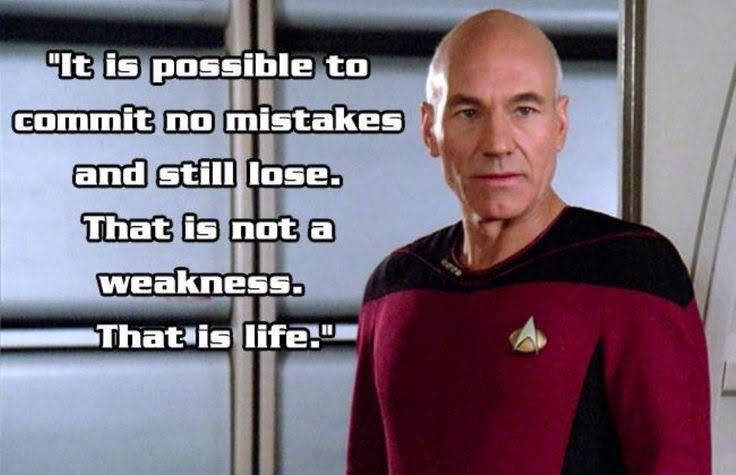
When asked to make this list, I immediately thought of one of my favorite Star Trek quotes. The fundamental challenge with philanthropy is that there are too many proposals and we cannot fund them all. Funders make hard choices and reject great programs every day for reasons beyond their control.
When we review a proposal, we focus on giving the authors access to a wide range of perspectives about their work so they can focus on their next grant. We usually cannot explain exactly why they did not receive a particular grant, and even if we could they can’t go back in time and apply again.
2. Funder fit.
This is one of the more common topics during our report discussions. Many of the proposals we review are clearly not a good fit for the funder.
Some funders issue vague RFPs and it is not always clear what they are looking for. But others are very clear about what, where, why, and how they will fund. You should believe what they tell you and make sure to take your blinders off when assessing whether or not you are a fit for a funding opportunity.
3. The grant seekers did not put themselves in the shoes of their competitors or their funder.
Increasingly, philanthropic organizations are staffed by professionals. Passionate founders without grant writing experience CAN be successful, but they should realize that their competitors have professional grant writers and their funders employ professional program officers who read many proposals at a time.
Joining the Unfunded List Evaluation Committee can help you build this perspective. We will assign a few proposals to you and you can review them as a neutral observer. This perspective will strengthen your own proposal writing.
4. Unanswered questions.
Often, grant proposal writers are too close to the issue and fail to answer questions in a way that is accessible to someone who is new to the issue. Other times, they copy and paste language that is very convincing, but not at all related to what was asked.
When a grantmaker asks specific questions it means they are looking to evaluate you based on your answer to that question. You will be making it easy for them to put you in the no pile if you dodge a question.
Even with proposals that are more general and do not respond to specific questions, our evaluators often note in their feedback that there were things they wished to know but did not learn in the proposal. Our feedback reports can be valuable tools for making sure future drafts do not leave questions (written or unwritten) unanswered.
5. Pie in the sky requests.
Too much money, odd budgets, no track record, huge salaries, nebulous or ill defined impact, and other unrealistic requests can be red flags to funders. We have seen it all. All of these proposals can be rewritten and funded with help, diligence, and care.
6. They were not eligible, or otherwise applied incorrectly.
One of the most disheartening discoveries during our review process is when proposals are rejected due to applicant ineligibility or incorrect application procedures. Common issues include omitted sections, disregarded instructions, or clear mismatches with program requirements such as corporate status, geography, or issue area. For instance, a Tanzanian community health organization applied to a U.S.-only funder, hoping to sway reviewers despite knowing the geographical restriction. Another case involved a small grassroots organization from an impoverished region sending proposals to generic email addresses of potential funders for years. In our discussions with these applicants, we emphasized the critical importance of adhering to proper application processes to have any chance of success.
7. They applied for a grant at all.
Grants are only one way to fund an organization. Many organizations are able to accomplish their missions without a single cent of grant funding. The process of grant seeking is onerous. It is time-consuming and there is very little room for error. Often, it is those with strong relationships who get the funding rather than those with the best programs or the highest quality proposals. The competition is fierce and nearly every grant maker receives far more great proposals than they can afford to fund. Before applying for a grant, every potential author should carefully consider whether it’s worth the resource investment.